
How to Choose the Right Web Hosting Plan
Choosing the right web hosting plan is one of the most important decisions when building a website. Whether you are starting a personal blog, launching a business website, or creating an online store, your hosting service affects your website's speed, security, reliability, and overall performance.
With so many options available, including shared hosting, VPS hosting, cloud hosting, and dedicated servers, it can be difficult to know which plan is right for you.
The good news is that you do not need the most expensive hosting package to build a successful website. You need a plan that matches your website's requirements, budget, and future goals.
In this guide, we explain how to choose the right web hosting plan and what to check before purchasing.
1. Understand the Different Types of Web Hosting
Before buying hosting, understand the main hosting options available.
Shared Hosting
Shared hosting is usually the most affordable option. Multiple websites share resources on the same physical server.
It is suitable for beginners, personal blogs, portfolios, and small business websites. Most plans include an easy-to-use control panel and require little technical knowledge.
VPS Hosting
VPS hosting provides an isolated virtual server with allocated resources such as CPU, RAM, and storage.
It offers more control and flexibility than shared hosting. It is suitable for growing websites, developers, agencies, and businesses that need custom server configurations.
Cloud Hosting
Cloud hosting uses computing infrastructure that can draw resources from multiple connected servers. Depending on the provider, it can offer flexible scaling and improved infrastructure resilience.
It is useful for growing websites, applications, and businesses with changing traffic requirements.
Dedicated Server Hosting
Dedicated hosting provides an entire physical server for one customer. It offers extensive control and access to the server's resources but usually costs more.
It is suitable for demanding applications, large websites, and businesses with specialized infrastructure requirements.
2. Consider Your Website's Purpose
Your website's purpose should guide your hosting decision.
For example:
- Personal blog: Basic shared hosting is often sufficient.
- Small business website: Shared or managed WordPress hosting may be suitable.
- Online store: Choose hosting with sufficient resources, security features, and reliable backups.
- Growing website: VPS or cloud hosting may provide additional flexibility.
- Web application: VPS or cloud infrastructure may be more appropriate.
- High-traffic website: Consider cloud or dedicated hosting based on actual resource requirements.
Avoid purchasing an expensive plan simply because it advertises more resources. Start with what your website actually needs.
3. Check Storage, RAM, and CPU Resources
Hosting specifications directly affect the workloads your website can handle.
Storage: Check how much disk space is included and whether the provider uses SSD or NVMe storage. Faster storage can improve file and database operations, although performance also depends on the complete server configuration.
RAM: Memory is important for databases, applications, and website processes. Websites with more visitors, plugins, or complex functionality may require additional memory.
CPU: CPU capacity affects how efficiently your website processes requests and runs applications. Check whether the provider specifies resource limits and usage policies.
Do not focus only on advertised storage space. Compare the resources that matter to your website.
4. Compare Hosting Prices and Renewal Costs
Price is an important factor, especially for startups and small businesses.
Many hosting companies advertise attractive introductory offers, but the renewal price may be significantly higher.
Before purchasing, check:
- Monthly and annual pricing.
- Renewal charges.
- Setup or migration fees.
- Domain registration costs.
- SSL certificate availability.
- Backup charges.
- Control panel licensing fees.
- Taxes and additional service costs.
The cheapest hosting plan is not always the best value. A slightly more expensive plan may include useful features that would otherwise cost extra.
5. Look for Security Features
Website security should never be ignored.
A good hosting plan should provide appropriate security features, such as SSL support, server-level protection, account isolation, and security monitoring.
Also check whether the provider offers automatic backups, malware scanning, firewall protection, and support for restoring compromised websites.
Remember that hosting security is a shared responsibility. Keep your CMS, plugins, themes, passwords, and applications updated.
6. Check Performance, Uptime, and Server Location
A slow or frequently unavailable website can frustrate visitors and affect business operations.
Look for providers that clearly explain their infrastructure, uptime commitments, and support policies.
Server location can also affect loading times. If most of your visitors are in Nepal, consider testing performance from Nepal and comparing available data-center locations. A nearby server is not automatically faster; network routing and infrastructure quality matter too.
A content delivery network (CDN) can help deliver static website content from locations closer to visitors.
7. Consider Customer Support and Ease of Management
Good technical support can save time when something goes wrong.
Before choosing a provider, check:
- Whether support is available 24/7.
- Available contact methods, such as live chat or tickets.
- Whether migration assistance is included.
- Whether support covers server administration or only basic hosting issues.
- Whether documentation and tutorials are available.
If you are a beginner, choose a managed hosting service or a plan with a user-friendly control panel. Developers may prefer a VPS with root access and greater configuration freedom.
8. Choose Hosting That Can Grow With You
Your website may start small but grow over time.
Look for a provider that allows you to upgrade storage, memory, CPU, or hosting types when necessary. Check whether upgrades require migration or downtime.
Starting with shared hosting and upgrading to VPS or cloud hosting later can be a sensible approach.
Final Verdict
Choosing the right web hosting plan does not mean purchasing the most powerful server or the cheapest package. It means finding the right balance between price, performance, security, support, and flexibility.
For beginners and small websites, shared hosting is often a practical starting point. Growing websites may benefit from VPS or cloud hosting, while demanding applications may require dedicated infrastructure.
Take time to compare providers, understand renewal prices, review resource limits, and check security and backup options.
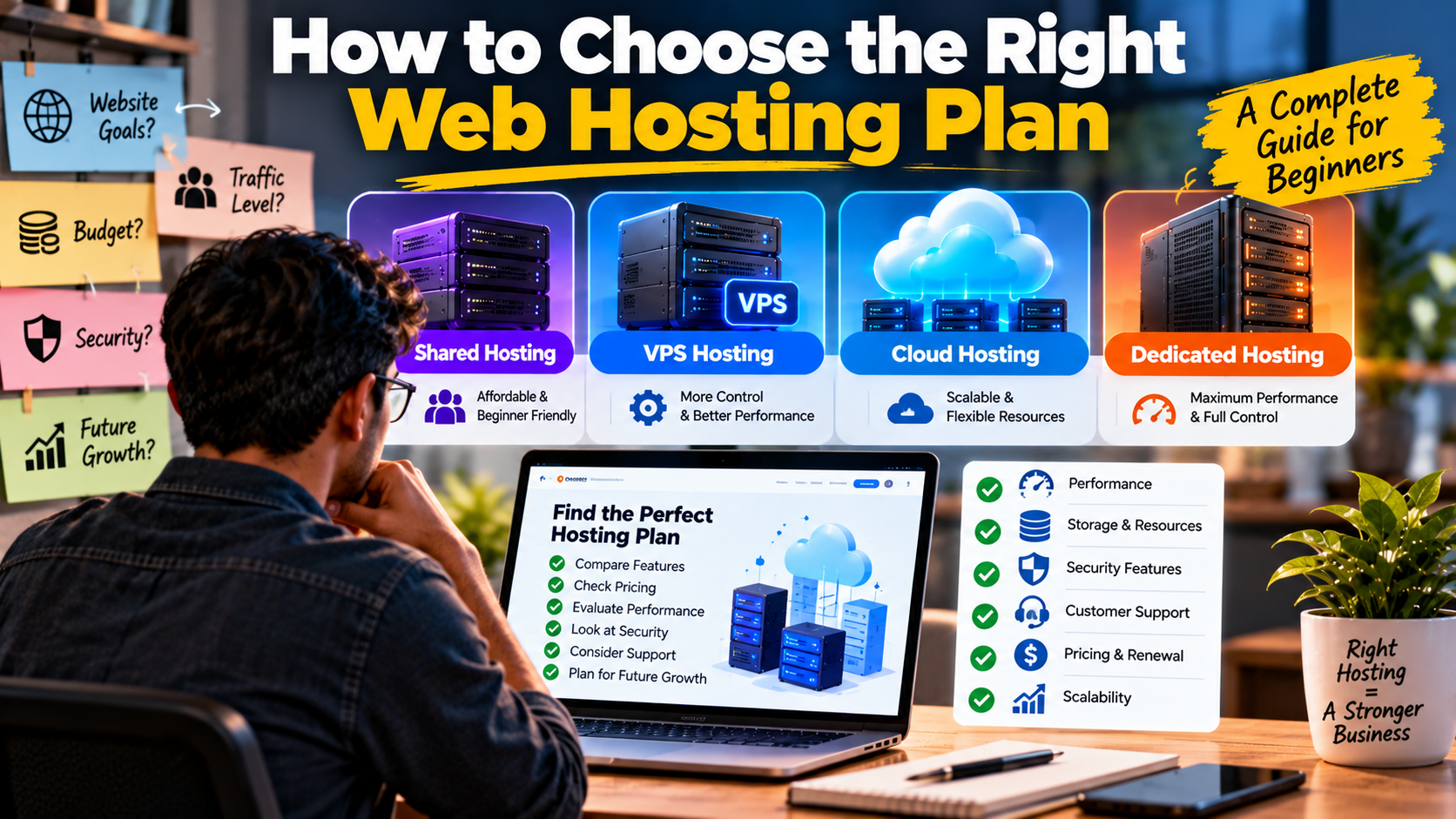
Choose hosting based on what your website needs today, while making sure you have room to grow tomorrow.
Choosing the right web hosting plan is one of the most important decisions when building a website. Whether you are starting a personal blog, launching a business website, or creating an online store, your hosting service affects your website's speed, security, reliability, and overall performance.
With so many options available, including shared hosting, VPS hosting, cloud hosting, and dedicated servers, it can be difficult to know which plan is right for you.
The good news is that you do not need the most expensive hosting package to build a successful website. You need a plan that matches your website's requirements, budget, and future goals.
In this guide, we explain how to choose the right web hosting plan and what to check before purchasing.
1. Understand the Different Types of Web Hosting
Before buying hosting, understand the main hosting options available.
Shared Hosting
Shared hosting is usually the most affordable option. Multiple websites share resources on the same physical server.
It is suitable for beginners, personal blogs, portfolios, and small business websites. Most plans include an easy-to-use control panel and require little technical knowledge.
VPS Hosting
VPS hosting provides an isolated virtual server with allocated resources such as CPU, RAM, and storage.
It offers more control and flexibility than shared hosting. It is suitable for growing websites, developers, agencies, and businesses that need custom server configurations.
Cloud Hosting
Cloud hosting uses computing infrastructure that can draw resources from multiple connected servers. Depending on the provider, it can offer flexible scaling and improved infrastructure resilience.
It is useful for growing websites, applications, and businesses with changing traffic requirements.
Dedicated Server Hosting
Dedicated hosting provides an entire physical server for one customer. It offers extensive control and access to the server's resources but usually costs more.
It is suitable for demanding applications, large websites, and businesses with specialized infrastructure requirements.
2. Consider Your Website's Purpose
Your website's purpose should guide your hosting decision.
For example:
- Personal blog: Basic shared hosting is often sufficient.
- Small business website: Shared or managed WordPress hosting may be suitable.
- Online store: Choose hosting with sufficient resources, security features, and reliable backups.
- Growing website: VPS or cloud hosting may provide additional flexibility.
- Web application: VPS or cloud infrastructure may be more appropriate.
- High-traffic website: Consider cloud or dedicated hosting based on actual resource requirements.
Avoid purchasing an expensive plan simply because it advertises more resources. Start with what your website actually needs.
3. Check Storage, RAM, and CPU Resources
Hosting specifications directly affect the workloads your website can handle.
Storage: Check how much disk space is included and whether the provider uses SSD or NVMe storage. Faster storage can improve file and database operations, although performance also depends on the complete server configuration.
RAM: Memory is important for databases, applications, and website processes. Websites with more visitors, plugins, or complex functionality may require additional memory.
CPU: CPU capacity affects how efficiently your website processes requests and runs applications. Check whether the provider specifies resource limits and usage policies.
Do not focus only on advertised storage space. Compare the resources that matter to your website.
4. Compare Hosting Prices and Renewal Costs
Price is an important factor, especially for startups and small businesses.
Many hosting companies advertise attractive introductory offers, but the renewal price may be significantly higher.
Before purchasing, check:
- Monthly and annual pricing.
- Renewal charges.
- Setup or migration fees.
- Domain registration costs.
- SSL certificate availability.
- Backup charges.
- Control panel licensing fees.
- Taxes and additional service costs.
The cheapest hosting plan is not always the best value. A slightly more expensive plan may include useful features that would otherwise cost extra.
5. Look for Security Features
Website security should never be ignored.
A good hosting plan should provide appropriate security features, such as SSL support, server-level protection, account isolation, and security monitoring.
Also check whether the provider offers automatic backups, malware scanning, firewall protection, and support for restoring compromised websites.
Remember that hosting security is a shared responsibility. Keep your CMS, plugins, themes, passwords, and applications updated.
6. Check Performance, Uptime, and Server Location
A slow or frequently unavailable website can frustrate visitors and affect business operations.
Look for providers that clearly explain their infrastructure, uptime commitments, and support policies.
Server location can also affect loading times. If most of your visitors are in Nepal, consider testing performance from Nepal and comparing available data-center locations. A nearby server is not automatically faster; network routing and infrastructure quality matter too.
A content delivery network (CDN) can help deliver static website content from locations closer to visitors.
7. Consider Customer Support and Ease of Management
Good technical support can save time when something goes wrong.
Before choosing a provider, check:
- Whether support is available 24/7.
- Available contact methods, such as live chat or tickets.
- Whether migration assistance is included.
- Whether support covers server administration or only basic hosting issues.
- Whether documentation and tutorials are available.
If you are a beginner, choose a managed hosting service or a plan with a user-friendly control panel. Developers may prefer a VPS with root access and greater configuration freedom.
8. Choose Hosting That Can Grow With You
Your website may start small but grow over time.
Look for a provider that allows you to upgrade storage, memory, CPU, or hosting types when necessary. Check whether upgrades require migration or downtime.
Starting with shared hosting and upgrading to VPS or cloud hosting later can be a sensible approach.
Final Verdict
Choosing the right web hosting plan does not mean purchasing the most powerful server or the cheapest package. It means finding the right balance between price, performance, security, support, and flexibility.
For beginners and small websites, shared hosting is often a practical starting point. Growing websites may benefit from VPS or cloud hosting, while demanding applications may require dedicated infrastructure.
Take time to compare providers, understand renewal prices, review resource limits, and check security and backup options.
Choose hosting based on what your website needs today, while making sure you have room to grow tomorrow.