
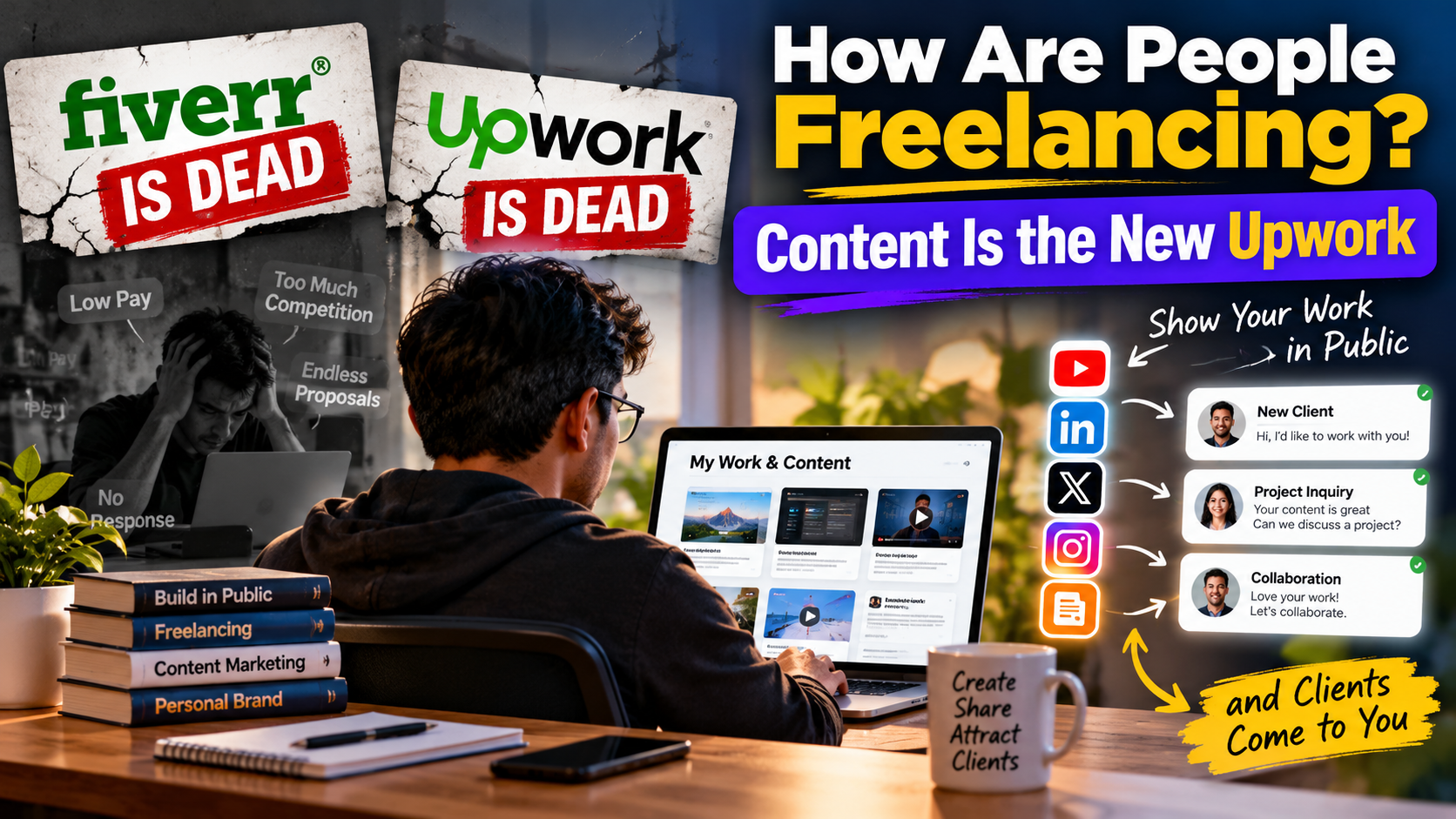
Fiverr Is Dead. Upwork Is Dead. How Are People Freelancing? Content Is the New Upwork
For years, freelancers have relied on platforms like Fiverr and Upwork to find clients. Create a profile, send proposals, compete on price, and wait for someone to hire you.
But there is another way to build a freelancing business: show your work publicly and let potential clients discover you.
Fiverr and Upwork are not literally dead, but relying entirely on freelance marketplaces can limit your opportunities. Today, freelancers can also use content, personal branding, and social media to attract clients directly.
How to Get Freelance Clients Without Fiverr or Upwork
The idea is simple: instead of only telling people what you can do, demonstrate it.
If you are a web developer, share websites you build. If you are a graphic designer, publish your designs. If you work in SEO, explain how you improve websites. If you edit videos, show before-and-after examples.
Every useful post gives potential clients another opportunity to discover your skills.
You do not need thousands of followers to get started. You need relevant work, a clear service, and a way for interested people to contact you.
Content Is the New Upwork
Content can work like a public portfolio that reaches people beyond your existing network.
Consider two freelancers. One spends hours sending proposals to potential clients. The other shares useful tutorials, project breakdowns, and practical advice.
The first freelancer depends mainly on finding opportunities. The second is also building an online reputation that can generate opportunities over time.
Content does not guarantee clients, but it helps demonstrate your expertise before a sales conversation even begins.
What Should Freelancers Post?
You do not need to become an influencer. Start by sharing content related to the services you offer.
- Portfolio projects: Show what you have created and explain your process.
- Tutorials: Teach people something useful in your field.
- Case studies: Explain the problem, your solution, and verified results.
- Lessons learned: Share mistakes, improvements, and practical experiences.
- Industry insights: Answer questions your potential clients are asking.
Publish on platforms where your target customers spend time, such as LinkedIn, YouTube, Instagram, or your own website.
Make your profile clear about what you offer and how people can hire you.
Should You Quit Fiverr and Upwork?
Not necessarily. Both platforms can still help freelancers find work, especially when starting out.
A smarter approach is to diversify. Use freelance marketplaces if they work for you, while building a portfolio, publishing useful content, networking, and developing your own professional reputation.
That way, your entire business does not depend on one platform's rules, rankings, or competition.
Final Thoughts
The future of freelancing is not simply about sending more proposals. It is also about making your skills visible.
Build projects. Share what you learn. Explain how you solve problems. Publish work that demonstrates your abilities.
You do not need to be famous. You need to be discoverable by the right people.
Fiverr can be a channel. Upwork can be a channel. But your skills, content, and reputation can become assets you build for yourself.
Stop only c
 hasing clients. Start showing them why they should hire you.
For years, freelancers have relied on platforms like Fiverr and Upwork to find clients. Create a profile, send proposals, compete on price, and wait for someone to hire you.
But there is another way to build a freelancing business: show your work publicly and let potential clients discover you.
Fiverr and Upwork are not literally dead, but relying entirely on freelance marketplaces can limit your opportunities. Today, freelancers can also use content, personal branding, and social media to attract clients directly.
How to Get Freelance Clients Without Fiverr or Upwork
The idea is simple: instead of only telling people what you can do, demonstrate it.
If you are a web developer, share websites you build. If you are a graphic designer, publish your designs. If you work in SEO, explain how you improve websites. If you edit videos, show before-and-after examples.
Every useful post gives potential clients another opportunity to discover your skills.
You do not need thousands of followers to get started. You need relevant work, a clear service, and a way for interested people to contact you.
Content Is the New Upwork
Content can work like a public portfolio that reaches people beyond your existing network.
Consider two freelancers. One spends hours sending proposals to potential clients. The other shares useful tutorials, project breakdowns, and practical advice.
The first freelancer depends mainly on finding opportunities. The second is also building an online reputation that can generate opportunities over time.
Content does not guarantee clients, but it helps demonstrate your expertise before a sales conversation even begins.
What Should Freelancers Post?
You do not need to become an influencer. Start by sharing content related to the services you offer.
- Portfolio projects: Show what you have created and explain your process.
- Tutorials: Teach people something useful in your field.
- Case studies: Explain the problem, your solution, and verified results.
- Lessons learned: Share mistakes, improvements, and practical experiences.
- Industry insights: Answer questions your potential clients are asking.
Publish on platforms where your target customers spend time, such as LinkedIn, YouTube, Instagram, or your own website.
Make your profile clear about what you offer and how people can hire you.
Should You Quit Fiverr and Upwork?
Not necessarily. Both platforms can still help freelancers find work, especially when starting out.
A smarter approach is to diversify. Use freelance marketplaces if they work for you, while building a portfolio, publishing useful content, networking, and developing your own professional reputation.
That way, your entire business does not depend on one platform's rules, rankings, or competition.
Final Thoughts
The future of freelancing is not simply about sending more proposals. It is also about making your skills visible.
Build projects. Share what you learn. Explain how you solve problems. Publish work that demonstrates your abilities.
You do not need to be famous. You need to be discoverable by the right people.
Fiverr can be a channel. Upwork can be a channel. But your skills, content, and reputation can become assets you build for yourself.
Stop only c